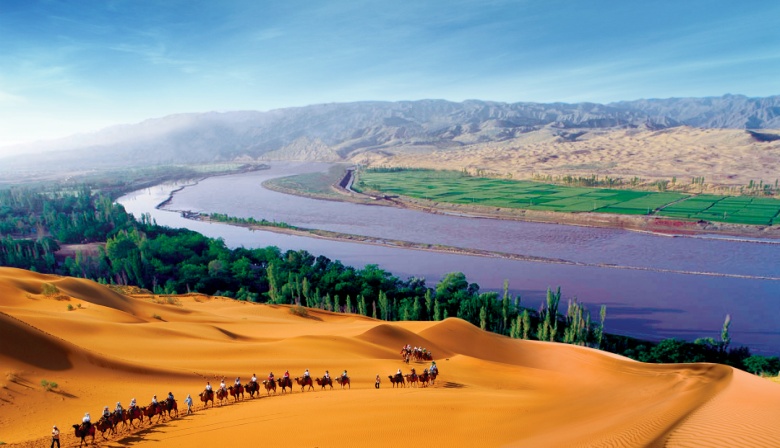
Ningxia Shapotou
Introduction
Shapotou, located in Zhongwei city within the Ningxia Hui autonomous region of Northwest China, is a unique district where the Tengger Desert meets the Yellow River, the country's second-longest river. The name "Shapotou" translates to "high sand dunes" or "the end of a desert," reflecting its geographical significance as a junction of desert and river landscapes. This scenic zone has become a must-see destination for tourists visiting Ningxia, offering a blend of splendid desert scenery and beautiful riverside views.
The area has undergone significant transformations over the years, particularly in terms of ecological restoration and infrastructure development. A major dredging project initiated in 2021 connected 22 lakes and five drainage channels, revitalizing the water systems and enhancing the rural landscape. The improvements have not only beautified the region but also benefited over 40,000 residents in two townships, with advancements such as sewage treatment facilities and a rural toilet revolution.
Shapotou is renowned for its diverse range of activities, including drifting down the Yellow River on traditional sheepskin rafts, sand skiing, and gazing at the Milky Way through glass hotel ceilings in the desert. The district's unique blend of natural beauty, cultural significance, and recreational opportunities has made it a magnet for tourists from around the world.
Geography
Shapotou is situated at the junction where the Yellow River enters Ningxia and begins its 397-kilometer journey through the region. The district lies at the edge of the Tengger Desert, China's fourth-largest desert, which stretches as far as the eye can see. This geographical positioning allows visitors to experience a striking contrast between the vast desert expanse and the serene riverside views.
The Tengger Desert has historically posed challenges due to its encroaching sands, which used to advance by four to five meters annually. However, innovative desert control measures, such as straw checkerboard barriers and afforestation efforts, have successfully pushed back the desert by 25 kilometers. These measures have transformed Shapotou from a harsh, sandstorm-prone area into a thriving ecological and tourism hub.
The district's water systems have also been revitalized through connectivity projects, linking lakes and drainage channels to improve water quality and prevent stagnation. This has created a picturesque landscape along the northern bank of the Yellow River, with clear waterways weaving through cultural and scenic sites. The integration of desert and river ecosystems makes Shapotou a unique geographical marvel.
History
Shapotou's history is deeply intertwined with efforts to combat desertification and harness its natural resources. In the 1950s, the Baotou-Lanzhou Railway was constructed as part of China's western development strategy. Portions of the railway passing through the desert required innovative sand control methods to ensure its operation. Led by meteorologist Zhu Kezhen, local residents developed a technique involving wheat straw bundles arranged in grid patterns to stabilize the sand. This method, combined with the planting of psammophytes, effectively controlled the desert's movement and protected the railway.
The success of these sand control measures attracted researchers and visitors from around the world, transforming Shapotou into a model for desert management. In the 1970s, the area began to gain recognition for its scenic beauty, leading to the development of tourism infrastructure. By 2007, Shapotou was designated as a national 5A-level scenic spot, marking its transition from a site of scientific study to a popular tourist destination.
Over the years, Shapotou has continued to evolve, introducing recreational activities such as dune surfing, zip-lining, and camel rides. The district's historical significance as a site of innovation and resilience against desertification remains a cornerstone of its identity.
Tourism
Shapotou is a premier tourist destination offering a wide array of activities and attractions. Visitors can drift down the Yellow River on traditional sheepskin rafts, a transportation method with a history of nearly 2,000 years. These rafts, made from sheepskin bags, were once vital for transport along the river but are now a highlight of the region's tourism.
Adventure enthusiasts can enjoy sand skiing, sand surfing, and zip-lining across the Yellow River. The district also features unique accommodations, such as the Desert Star Hotel, which offers stunning views of the starry sky reflected in desert lakes. Glamping sites with well-appointed tents, art and music festivals, and gourmet events cater to modern travelers seeking immersive experiences.
The Shapotou scenic zone is open year-round, with peak visiting seasons from May to early October. Ticket prices are affordable, with discounts for children, students, and seniors. Visitors are advised to stay hydrated, protect themselves from sunburn, and wear sunglasses to shield their eyes from the sand.
Shapotou's tourism infrastructure continues to expand, with new services and facilities targeting younger generations. The district's blend of natural beauty, cultural heritage, and recreational opportunities makes it one of China's most interesting places to visit.
Ecology
Shapotou is a testament to successful ecological restoration and desert management. The district's innovative sand control methods, such as straw checkerboard barriers and afforestation, have transformed the Tengger Desert into a sustainable environment. These measures have not only protected infrastructure like the Baotou-Lanzhou Railway but also created a model for combating desertification globally.
The connectivity of water systems has further enhanced the region's ecology. By linking lakes and drainage channels, stagnant water bodies have been revitalized, improving water quality and supporting wetland ecosystems. Sewage treatment facilities and a rural toilet revolution have contributed to cleaner water and a healthier environment.
Shapotou's ecological achievements have attracted international attention, with visitors from Africa and other regions seeking to learn from its desert management practices. The district's transformation from a "sea of death" to a thriving ecological hub underscores the potential for human ingenuity to overcome environmental challenges.
Cultural Significance
The Tang Dynasty poet Wang Wei famously described the beauty of Shapotou in his poem, capturing the essence of its desert and river landscapes. The district's traditional sheepskin rafts, known as the "ancient boat on the Yellow River", reflect its rich cultural heritage.
The region's innovative sand control methods have also become a symbol of resilience and ingenuity. Shapotou's success in combating desertification has inspired visitors and researchers worldwide, highlighting the cultural importance of environmental stewardship.
Local traditions and modern tourism initiatives coexist in Shapotou, offering visitors a glimpse into the district's unique cultural identity. From camel rides to gourmet festivals, Shapotou celebrates its heritage while embracing contemporary experiences.
Transportation
Shapotou is easily accessible by various modes of transportation. Located 16 kilometers west of Zhongwei city, the district is well-connected to major cities in Ningxia and beyond. Visitors can reach Shapotou by car, train, or bus, with self-driving being a popular option for exploring the scenic zone.
The Baotou-Lanzhou Railway, constructed in the 1950s, remains a vital transportation link, showcasing the district's historical significance in China's western development. The railway's protection from desert encroachment through innovative sand control methods underscores the importance of transportation infrastructure in Shapotou's history.
For tourists, the district offers convenient access to its attractions, with parking facilities and shuttle services available. Whether arriving by train or car, visitors can easily explore the unique blend of desert and river landscapes that define Shapotou.








